It’s invulnerable yet mutates as we like- Memory! And I see it as a fascinating element of storytelling. How much, though? I guess compelling enough for me to post a write-up after months.
Charlotte Wells’ Aftersun starts as a fresh breeze, morphs into a whirlpool, and lives rent-free in your mind for days. In focus is our protagonist Sophie reliving one particular summer holiday spent with her father through a collection of video tapes.
The film, in its entirety, is about that vacation, which the viewers get to see through Sophie’s memories. It neither has forced dramatic bits nor lingers for too long in the characters’ personal spaces. And this is where Aftersun stands out amongst its contemporaries. Let’s delve deeper and understand why it is the epitome of profoundly made cinema.
Sophie’s Gaze: A Confluence Of Two Eras
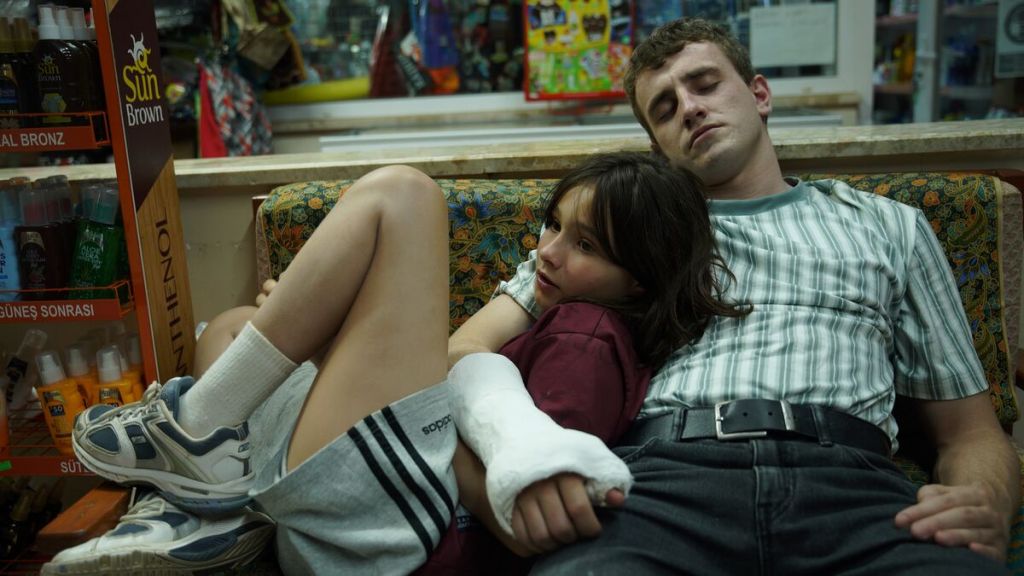
At the crux of Aftersun is the father-daughter duo weighed down by memories and personal crises, albeit in different timelines. The film opens with a series of snippets from a videotape featuring a young Sophie, the loving father Calum, and their exquisitely somber Turkey vacation. For 11-year-old Sophie, it’s just another summer vacation, but for Calum, shades of grief and longing come and go as he tries to deal with an uncertain future whilst being a parent.
And now, in the present timeline, a 30-something Sophie tries to reconcile with her father through her memories of him. The persona her 11-year-old self couldn’t understand! And this eventually leaves her at crossroads between two eras. Now, through her personal crisis, she tries to fill in the gloomy life story of her father.
Calum’s Lifestory: An Unstated Melancholy
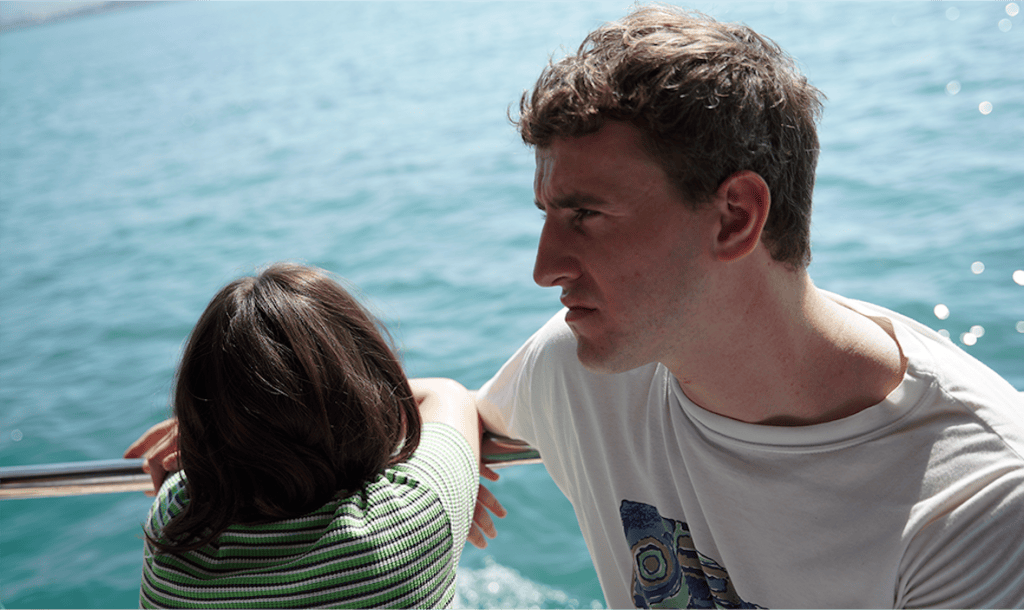
For me, the subtle nature of storytelling is the highlight. To be precise, there are no on-the-face plot points or conflicts in the story. But what lies under the facade of an upbeat film stays forever with you. And that’s the magic of cinema you crave for! This unstated part of the story gets conveyed through Calum’s character.
Amid the vacation, the days pass by, Sophie and Calum exploring places, lazing around the pool, etc. But at night, while Sophie sleeps peacefully, something keeps Calum awake. The reason unknown! Seemingly, a mid-life crisis, the fact that he’s broke, an uncertain future, or a sum of all. Nevertheless, he suffers from a form of depression.
Through Calum’s story arc, the film talks about mental health using the power of silence. And thus, it becomes one of the realistic portrayals of depression, solitude, etc., on screens. As the darkness creeps in, the static frames convey Calum and his mundane life.
Memories Make Us
Be it Adoor Gopalakrishnan’s Anantaram or Ingmar Bergman’s Autumn Sonata, the personal conflicts or motives emerging through memories make the characters wholesome. In Aftersun, we don’t know much about the present time Sophie. The 2-3 sequences that oscillate in the ongoing time-space show Sophie dealing with a crisis of her own. And her pent-up emotions burst out in the climax scenes.
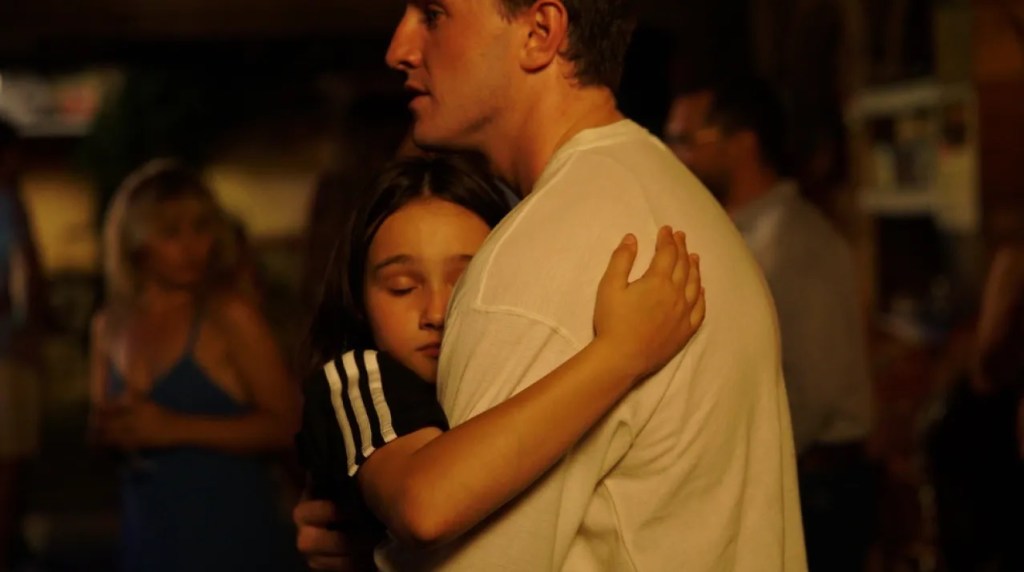
In the past, when the vacation is nearing its end: Sophie and Calum’s touching dance sequence. On the other hand- In the present time-space, she’s holding on to an imaginary Calum, wanting to never let him go. But the truth is inevitable! Time has flown by, things have changed, and the boon of life has morphed into a bane.
Do not miss out, Aftersun streaming exclusively on MUBI.


Leave a comment